
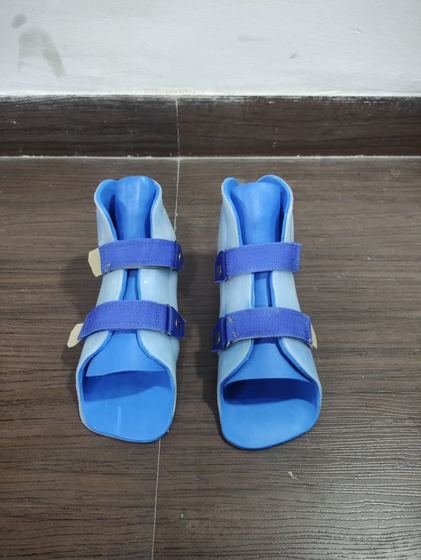
If your child has finished clubfoot casting and you have been handed a pair of boots on a bar, this page is for you. The casting phase is visible, structured and clearly progressing. Bracing feels like the opposite — it goes on for years, nothing appears to change, and it is the stage families find hardest.
It is also the stage the result depends on. That is worth knowing at the start.
Before anything else: the wear schedule for your child is set by the surgeon or clinician managing their treatment. Nothing here changes that. This page explains what the brace does and how to live with it — it is not a treatment plan.
Why bracing follows casting
Clubfoot — congenital talipes equinovarus, or CTEV — is treated in most places by the Ponseti method: a series of casts that gradually bring the foot into position, usually with a small procedure to the Achilles tendon.
Casting achieves the correction. It does not hold it. Left alone, a corrected clubfoot has a strong tendency to return towards its original position, and that tendency persists for years as the child grows. Bracing is what holds the correction during that period.
This is the single most important thing to understand, because the brace does not look like it is doing anything. It is preventing something, and prevention is invisible until it fails.
What the brace is
A foot abduction brace is two boots fixed to a bar. The boots hold the feet; the bar holds them apart at a set angle and a set width.
- The boots hold each foot in the corrected position. Open-toed designs are common so you can check toe position.
- The bar sets the abduction angle — how far each foot is turned out — which is prescribed by the treating clinician, and differs between an affected and unaffected foot in one-sided cases.
- The width is normally set to roughly the child’s shoulder width and is adjusted as they grow.
Both feet are braced even when only one is affected, because the bar needs a stable anchor on both sides.
The wear schedule
The usual pattern is full-time wear for a period after casting, then night-and-nap wear for several years. The exact hours and the exact duration are a clinical decision and vary between children and between treating centres.
What matters is this: the risk of relapse is highest in the years immediately after casting, and reduces as the child gets older. Stopping early is the most common reason correction is lost, and a relapse usually means going back to casting.
If the schedule is not working — the brace is causing skin problems, your child cannot settle, life has made it impossible — say so to the treating team rather than quietly reducing the hours. Fit problems are usually solvable. Lost correction is harder to recover.
Why this stage is hard
It is worth naming plainly, because parents often assume they are the only ones struggling:
- Casting had visible progress. Bracing does not.
- It lasts years, not weeks.
- Children resist it, particularly in the first nights and when learning to move.
- It affects sleep, which affects everybody.
- Because nothing visibly worsens when you skip a night, consistency erodes gradually.
Most children settle within one to two weeks of starting. The early period is the hardest part, not a sign that it will always be this difficult.
Practical problems and what helps
| Problem | What usually helps |
|---|---|
| Child kicks the brace off | Check the heel is seated right down in the boot — a lifted heel is the usual cause. Tell your clinician if it keeps happening |
| Red marks on the heel or ankle | Marks that fade within about 20 minutes are normal. Marks that persist, or any blister, need the fit checked |
| Skin rubbing | A thin cotton sock under the boot, with no seam across the heel |
| Crying at bedtime | Put the brace on as part of the routine, before the last feed or story, rather than at the moment of sleep |
| Boots getting tight | Growth. Needs refitting, not forcing |
| Bar feels loose | Check fixings before each night and have them checked at review |
Tell the treating team about anything you change. Adding padding, loosening straps or shortening wear time all alter how the brace works. There is usually a proper fix.
Growth and refitting
Children outgrow these braces regularly, and an outgrown brace stops holding the position before it looks obviously too small. Watch for toes at the end of the boot, difficulty fastening, new marks that were not there before, or the heel no longer seating properly.
Bring the current brace to every appointment. Wear patterns tell us things a young child cannot.
What Limbgenixx makes
We make foot abduction bracing for children who have completed the casting stage, to the abduction angle and bar width the treating clinician prescribes. We also make replacement boots as children grow, reset the bar, and fabricate custom AFOs where these are prescribed as part of ongoing management.
We do not direct treatment. The surgeon or clinician managing your child sets the prescription and the schedule; we make the device to it and keep it fitting as your child grows. See pediatric orthotics and Kare for Kids.
This article is general information for families, not medical advice. Clubfoot treatment and bracing schedules are directed by the treating surgeon or clinician. Always follow the prescription you have been given.
Frequently asked questions
How long does my child need to wear the brace?
That is set by the treating clinician. The usual pattern is full-time wear for a period after casting, then night and nap wear for several years. The exact hours and duration vary between children and centres.
What happens if we stop early?
Relapse risk is highest in the years immediately after casting, and stopping early is the most common reason correction is lost. A relapse usually means returning to casting. If the schedule is not working, raise it with the treating team rather than reducing it yourself.
My child only has one clubfoot. Why are both feet in the brace?
The bar needs a stable anchor on both sides. The unaffected foot is usually set at a different, smaller angle than the affected one — the prescription specifies both.
Is it normal for my child to cry when the brace goes on?
In the first nights, yes. Most children settle within one to two weeks. Putting it on as part of the bedtime routine rather than at the moment of sleep usually helps. Persistent distress after that period is worth having the fit checked.
Are red marks normal?
Marks that fade within about twenty minutes of removing the brace are usually acceptable. Marks that persist, any blister, or broken skin mean the fit needs attention — contact us and your clinician.
How often will the brace need replacing?
Regularly, because children grow. Watch for toes reaching the end of the boot, difficulty fastening, or the heel no longer seating properly. Bring the current brace to every review.
Does Limbgenixx make clubfoot braces?
Yes. We make foot abduction bracing to the angle and width prescribed by the treating clinician, supply replacement boots as children grow, and make custom AFOs where prescribed.
Need a clubfoot brace made or refitted?
Send us the prescription details and your child’s current measurements, or a photograph of the existing brace, and we will tell you what is needed.
Message us on WhatsAppContact & directions