
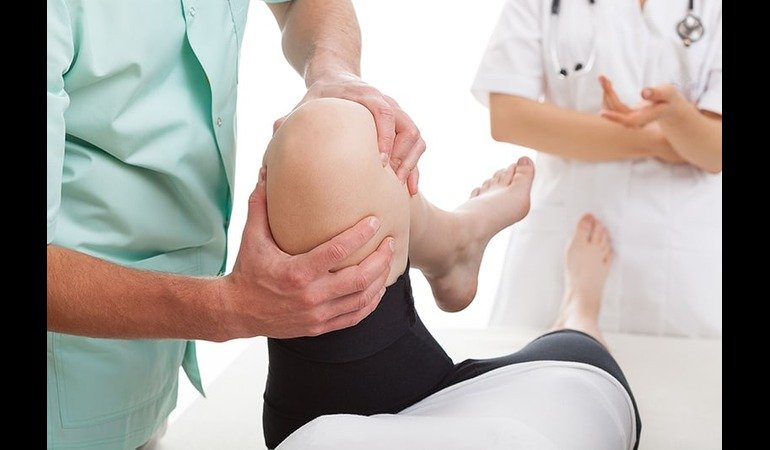
If a doctor has recommended a brace, splint or support, you may be wondering: what is an orthosis? In simple terms, an orthosis is an externally applied medical device that supports, aligns, protects or corrects a part of the musculoskeletal system — your bones, joints and muscles. From a simple shoe insole to a full leg brace, orthoses help millions of people move more safely, reduce pain and recover from injury. This guide explains the orthosis meaning, the main types of orthosis, and who benefits from one.
Orthosis definition (and orthosis vs orthotic vs orthotist)
The formal orthosis meaning, defined by the international standard ISO 8549, is "an externally applied device used to modify the structural and functional characteristics of the neuromuscular and skeletal system." Put plainly, an orthosis works on a body part you still have — it does not replace it. This is the key difference from a prosthesis, which substitutes for a missing limb.
Three closely related words often cause confusion:
- Orthosis — the device itself (plural: orthoses). This is the correct clinical noun for the brace, splint or support.
- Orthotic — used as an adjective ("orthotic device") and, in everyday speech, to describe shoe inserts or foot supports. When people compare "orthosis vs orthotic," they are usually describing the same thing in different registers.
- Orthotist — the certified clinician who assesses, designs and fits an orthosis. Orthotists work alongside prosthetists, doctors and physiotherapists.
To understand how orthoses differ from artificial limbs, read our companion guide on prosthetics vs orthotics.
What an orthosis does
Every orthotic device is prescribed to achieve one or more clinical goals. Understanding these goals helps explain why so many different designs exist:
- Support: An orthosis holds a weak or unstable joint in a safe position, taking load off tissues that cannot yet bear it — for example, an ankle support after a sprain.
- Stabilise: It limits unwanted or excessive movement so a joint can heal or function, such as a knee brace controlling side-to-side motion after a ligament injury.
- Offload: It redistributes pressure away from a painful or vulnerable area, which is vital for diabetic feet, arthritis and pressure sores.
- Correct alignment: It gradually guides bones and joints toward a healthier position, as a scoliosis brace does for a curving spine or an AFO does for a dropped foot.
- Assist function: It restores movement patterns, helping people walk, grip or stand who otherwise could not do so safely.
A single orthosis often combines several of these effects. The right balance depends on your diagnosis, which is why a professional assessment matters.
Types of orthoses by body region
Orthoses are usually named after the joints they cross, using standard abbreviations (for example AFO = Ankle-Foot Orthosis). The table below summarises the main types of orthosis grouped by the region of the body they support.
| Body region | Orthosis type | Typical purpose |
|---|---|---|
| Foot | Foot orthoses / insoles | Support the arch, cushion and redistribute pressure for flat feet, plantar fasciitis and diabetic feet |
| Ankle & foot | Ankle-Foot Orthosis (AFO) | Control foot drop, stabilise a weak ankle and improve walking |
| Knee, ankle & foot | Knee-Ankle-Foot Orthosis (KAFO) | Support the whole leg when the knee and ankle are weak or paralysed |
| Hip to foot | Hip-Knee-Ankle-Foot Orthosis (HKAFO) | Add hip control for extensive paralysis or spinal injury |
| Knee | Knee brace | Stabilise ligaments, offload arthritis and protect after surgery |
| Lower spine | Spinal brace (LSO) | Support the lumbar spine after injury, surgery or degeneration |
| Mid & lower spine | Spinal brace (TLSO) | Control the thoracic and lumbar spine, used for fractures and scoliosis |
| Neck | Cervical collar | Immobilise and support the neck after injury or strain |
| Wrist & hand | Wrist-hand splint | Rest and align the wrist for carpal tunnel, fractures and arthritis |
Lower-limb orthoses
Lower-limb devices are the most commonly prescribed. An ankle-foot orthosis (AFO) corrects foot drop caused by stroke or nerve injury, while a knee brace stabilises injured or arthritic knees. KAFOs and HKAFOs extend this support up the leg for polio, spinal cord injury and muscular conditions.
Spinal and upper-limb orthoses
Spinal orthoses range from soft lumbar belts to rigid spinal braces such as the LSO and TLSO, which control specific segments of the back. Upper-limb orthoses include wrist-hand splints and elbow supports that protect and reposition the arm during healing.
Who needs an orthosis
An orthosis may be prescribed for a wide range of conditions across all age groups. Common reasons include:
- Neurological conditions: Stroke, cerebral palsy, polio and spinal cord injury, which cause weakness, paralysis or foot drop.
- Orthopaedic injuries: Fractures, ligament tears and post-surgical recovery that need stabilisation.
- Chronic conditions: Arthritis, diabetes and osteoporosis, where offloading and support prevent complications.
- Foot problems: Flat feet, plantar fasciitis and heel pain, managed with foot orthoses and custom orthotic insoles.
- Spinal deformities: Scoliosis and kyphosis in children and adolescents, treated with corrective braces.
- Sports injuries: Knee and ankle instability requiring protection during return to activity.
Because the same symptom can have different causes, only a qualified orthotist or doctor should decide which orthosis you need.
Custom vs off-the-shelf orthoses
Not every orthosis is made the same way. Off-the-shelf (prefabricated) devices come in standard sizes and are ready to wear, making them affordable and quick for mild or short-term needs. Custom orthoses are moulded from a cast or 3D scan of your body for a precise fit, better correction and long-term comfort — essential for complex, growing or high-demand cases.
As a general rule, choose an off-the-shelf orthosis for mild, temporary or budget-conscious situations, and a custom orthosis when the fit is critical, the condition is long-standing, or the body shape is unusual. An orthotist will recommend the right route after examining you. In India, cost, follow-up care and the availability of certified components should all be considered before deciding.
Getting a custom orthosis at Limbgenixx
At Limbgenixx in Gwalior, our certified orthotists assess your condition, take precise measurements or a digital scan, and fabricate an orthosis matched to your body and lifestyle. We fit the full range — from foot orthoses and AFOs to KAFOs, spinal braces and wrist-hand splints — using internationally certified materials, and we provide the fitting, adjustments and follow-up that make an orthosis truly effective. Explore our complete orthotics solutions to see how we can help.
Not sure which orthosis you need?
Talk to the Limbgenixx orthotics team in Gwalior — serving patients across Madhya Pradesh and all of India.
WhatsApp Our Orthotist Call +91 9015884467Frequently asked questions
An orthosis is an external device that supports, aligns or corrects an existing body part, such as a brace or splint. A prosthesis replaces a missing body part, such as an artificial leg or hand after amputation. In short, an orthosis assists a limb you still have, while a prosthesis substitutes for one you have lost.
The terms are closely related and often used interchangeably. Orthosis is the formal medical term for the device itself, while orthotic is commonly used as an adjective and, in everyday speech, to refer to shoe inserts or foot orthoses. Both describe the same field of care, which is provided by an orthotist.
The most common orthoses include foot orthoses and insoles, ankle-foot orthoses (AFO), knee braces, knee-ankle-foot orthoses (KAFO), spinal braces such as LSO and TLSO, cervical collars, and wrist-hand splints. They are grouped by the body region they support.
Some orthoses are custom-made from a cast or scan of your body, while others are off-the-shelf prefabricated devices available in standard sizes. Custom orthoses offer the best fit and correction for complex or long-term needs, whereas off-the-shelf devices suit mild, short-term or budget-conscious cases. An orthotist recommends the right option after assessment.
References & trusted sources
- International Society for Prosthetics and Orthotics (ISPO) — Orthotic terminology & standards. ispoint.org
- American Orthotic & Prosthetic Association (AOPA). aopanet.org
- NHS — Orthotics & braces patient information. nhs.uk