
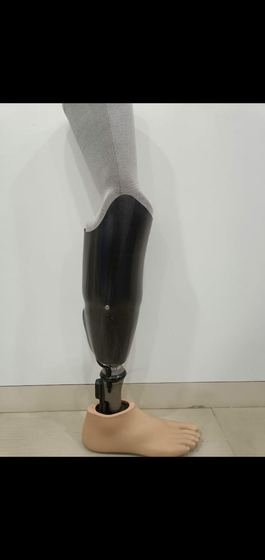
If you feel pain in a limb that is no longer there, you are not imagining it and you are not unusual. Phantom limb pain is one of the most common experiences after an amputation, and one of the least talked about — partly because it sounds strange to describe, and partly because people worry they will not be believed.
This page explains what it is, what distinguishes it from other pain after amputation, and what is generally used to manage it. It is written to help you have a better conversation with the team treating you. It is not a treatment plan, and nothing here replaces medical advice.
What phantom limb pain is
Phantom limb pain is pain that feels as though it comes from the part of the limb that has been removed. People describe it in very different ways — burning, shooting, cramping, crushing, electric, or a sense that the missing foot or hand is stuck in an uncomfortable position.
It is a genuine neurological phenomenon. The nervous system continues to represent the limb, and signals from that representation are experienced as coming from a limb that is no longer physically present. The pain is real; it is the limb that is not.
It can begin at different times. For some people it starts in the days after surgery. For others it appears months later, or comes and goes for years. Neither pattern means something has gone wrong.
Phantom sensation is not the same as phantom pain
These are often confused, and the difference matters when you describe what you are experiencing.
- Phantom sensation — feeling that the limb is still present, perhaps its position, temperature, or a sense of movement, without pain. This is very common and is not in itself a problem.
- Phantom pain — the same sense of presence, but painful.
Many people experience sensation without pain, and never need to do anything about it. Telling your clinician which one you have changes what they suggest.
How it differs from residual limb pain
This distinction is the single most useful thing on this page, because the two are managed completely differently and are easily mixed up.
| Phantom limb pain | Residual limb pain | |
|---|---|---|
| Where it feels like it is | In the missing part — the absent foot, hand or fingers | In the remaining limb itself |
| Common descriptions | Burning, shooting, electric, cramping, twisted position | Aching, rubbing, pressure, sharp at one spot |
| Relationship to the prosthesis | Often unrelated to wearing it | Frequently worse while wearing it, better when removed |
| Who usually helps | Your medical and rehabilitation team | Often a socket or fit problem — your prosthetist first |
Pain that appears when you put the limb on and settles when you take it off is usually a fit problem, not phantom pain. If that describes you, the place to start is your socket and liner, and it is often fixable. Many people live with avoidable discomfort for months because they assumed it was phantom pain and that nothing could be done.
Why it happens
There is no single agreed mechanism, and anyone who tells you there is has oversimplified it. Current understanding involves several factors together: changes in how the brain and spinal cord represent the missing limb, activity in the cut nerve endings in the residual limb, and the way the nervous system processes pain after injury.
Because the picture is mixed, management tends to be mixed too, and finding what works for one person often takes trial and adjustment.
Approaches used to manage it
These are approaches that are recognised and in general use. Which, if any, is appropriate for you is a decision for the clinicians managing your care — we are a prosthetics and orthotics centre, and we do not prescribe pain treatment.
Mirror therapy
A mirror is positioned so the intact limb's reflection appears where the missing limb would be. Moving the intact limb gives a visual impression of the absent limb moving. It is simple, non-invasive and widely used, and it is usually taught by a physiotherapist or occupational therapist rather than attempted unaided.
Desensitisation and residual limb care
Graded touch, massage and compression of the residual limb are commonly used, often alongside the stump socks and shrinkers used for volume management in the early months.
Medication
Several classes of medicine are used, and they are not the ones people expect — ordinary painkillers are often not the most effective option for nerve-type pain. This is entirely a matter for your doctor.
Physical activity and early mobilisation
Getting moving, including using a prosthesis where appropriate, is frequently part of management. See how to walk with a prosthetic leg.
Psychological support
Persistent pain affects sleep, mood and concentration, and those in turn affect pain. Support for that side is not an admission that the pain is “in your head” — it is treating a real consequence of a real problem.
What this page will not tell you. We are not going to claim any approach cures phantom limb pain, rank them for you, or suggest one instead of what your doctor has advised. Responses vary a great deal between individuals, and the evidence base is genuinely mixed.
Where a prosthesis fits in
Many people find that using a prosthesis affects their phantom symptoms, and some find comfortable, regular use helps. We cannot promise that, and we will not sell you a limb on that basis.
What we can say is narrower and more reliable: a badly fitting prosthesis makes everything harder. If your socket hurts, you wear the limb less, move less and sleep worse, and all of those make pain harder to cope with. Getting the fit right is worth doing for its own sake. If your limb is uncomfortable, see repair, servicing and adjustment — that is often a quicker fix than people expect.
When to speak to someone
- Pain that is getting worse rather than settling
- Pain that stops you sleeping or using your prosthesis
- New redness, swelling, heat, discharge or a wound on the residual limb — see someone promptly, this is not phantom pain
- Pain that appears only while wearing the prosthesis — speak to your prosthetist about the fit
- Low mood or anxiety alongside the pain
If you are early after amputation, types of prosthetic legs and prosthetic leg solutions cover what to expect as you approach fitting.
References & trusted sources
- NHS — Phantom limb pain, patient information. nhs.uk
- Amputee Coalition — Pain management resources for amputees. amputee-coalition.org
- International Society for Prosthetics and Orthotics (ISPO). ispoint.org
This article is general information, not medical advice, and does not replace assessment by a qualified clinician. Limbgenixx is a prosthetics and orthotics centre; pain management is directed by your medical team.
Frequently asked questions
Is phantom limb pain permanent?
Not necessarily. For many people it reduces over time, though the pattern varies widely and some people continue to experience it for years. It is not possible to predict an individual course, and anyone offering a guaranteed timeline is guessing.
Does everyone get phantom limb pain after an amputation?
No. Phantom sensation — feeling the limb is still present without pain — is very common. Painful phantom symptoms are also common but not universal, and severity ranges from occasional and mild to persistent and disabling.
Is the pain real, or is it psychological?
It is real. Phantom limb pain is a recognised neurological phenomenon, not an imagined one. Psychological support is sometimes part of managing it, as with any persistent pain, but that does not mean the pain is invented.
Will wearing a prosthesis stop phantom pain?
We cannot promise that. Some people find regular comfortable use helps; others notice no difference. What is clear is that a poorly fitting prosthesis makes things worse, so if yours is uncomfortable it is worth getting the fit checked regardless.
Can Limbgenixx treat phantom limb pain?
No. We make and fit prostheses and orthoses. Pain management is directed by your doctor and rehabilitation team. What we can do is make sure the device itself is not contributing to your discomfort.
What is mirror therapy?
A mirror is placed so that the reflection of the intact limb appears where the missing limb would be, creating a visual impression of it moving. It is non-invasive and widely used, and it is normally taught by a physiotherapist or occupational therapist.
Is it the pain, or is it the socket?
If discomfort appears when you put the limb on and settles when you take it off, that is usually a fit problem and it is often fixable. Send us a message and describe what you are feeling.
Message us on WhatsAppContact & directions